
Basement insulation in Roswell NM - a dry, sealed basement that holds its heat
Cold floors, damp walls or a musty smell downstairs? We deal with the water first, then insulate so the basement feels warmer and drier.
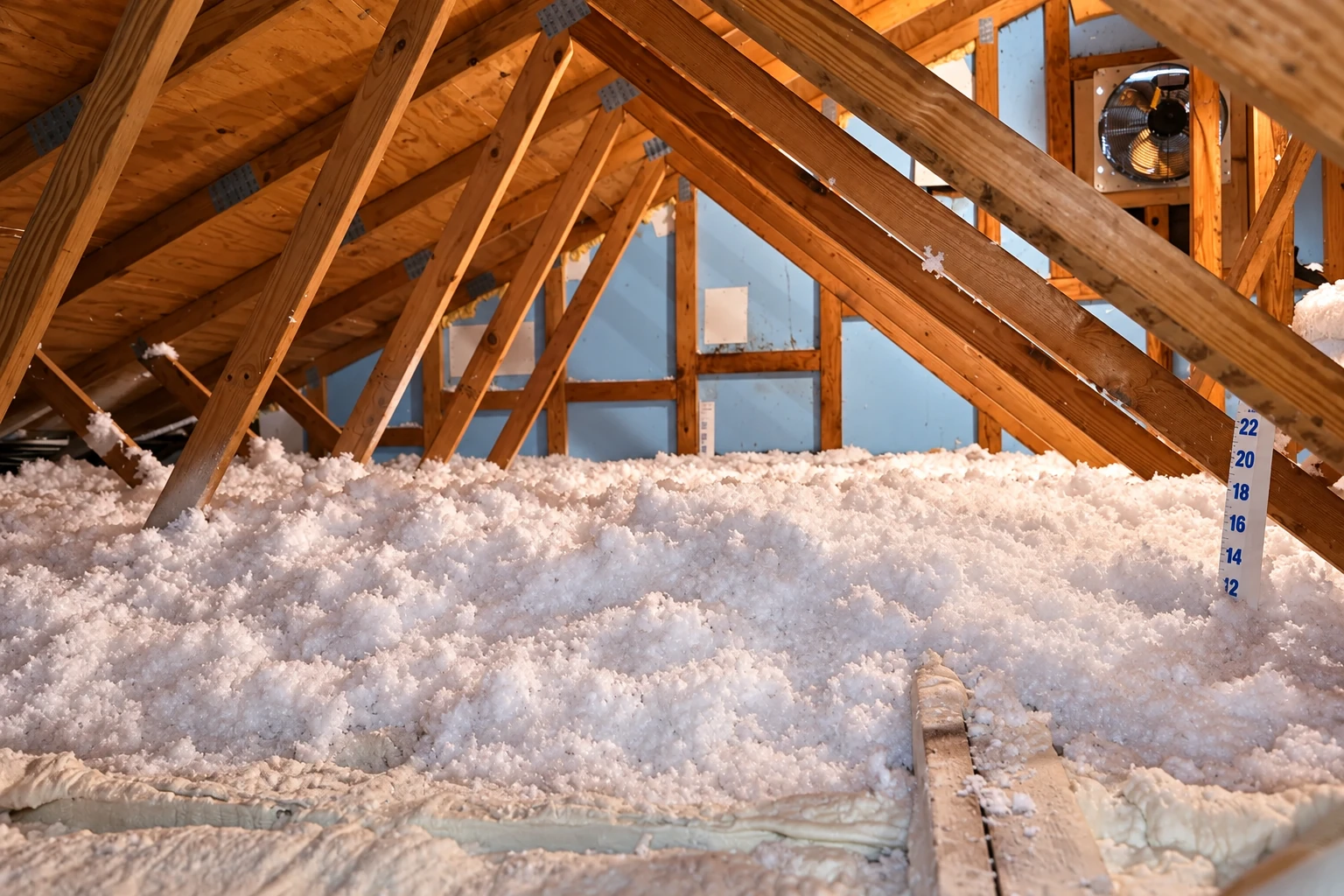
What does it take to insulate a basement in Roswell?
Basement insulation in Roswell means adding foam or fiberglass to the inside or outside of your foundation walls, so the room downstairs holds its heat and the walls handle moisture better.
It usually starts with cold floors upstairs, a musty smell, or plans to turn the basement into a family room. The price turns on whether there's water to fix first, how much wall we're covering, foam or fiberglass, and whether the finished room needs drywall over it. The schedule mostly waits on that water repair and on checking with the city about a permit, because nothing goes on the walls until both are settled. You get your own figure in the written estimate I put together after walking your basement with you.
What happens when you call about basement insulation in Roswell?
Call or send the form
I still answer the phone myself, so you'll be setting up a visit with the person who comes out. If you've seen water on the floor after a storm or stains on the walls, tell me then so I know what to look for.
I look over your basement
I come out myself, check the walls and floor for water, and take photos as I go. Then I walk you through what I found, so you understand your own basement before we talk about fixing anything.
You get a written estimate
The estimate lays out the work in order, from any water repair to the insulation and the layer that covers it. That way you can hold it up against any other bid and see whether a step got skipped.
Our crew does the work
Once you say yes, our installers do the job and treat your house like somebody lives there, because somebody does. Before we pack up, I go over the finished basement with you.
How we handle basement insulation, from leaks to foam
Any water coming in gets dealt with first, with runoff pointed away from the foundation, because insulation over a wet wall just hides the leak. Next we seal openings in the foundation wall where pipes and wires come through, so the insulation isn't fighting a draft. Then we talk through foam or fiberglass and whether you'll use the basement as living space, since a family room and a storage room call for different plans. Federal guidance says foam on basement walls has to be covered with drywall to meet building code, and spray foam can use ignition-barrier paint, a fire-resistant coating, instead. That layer goes in the estimate from the start, not as a surprise at the end. With fiberglass, plastic sheeting on the room side of a below-ground wall can trap moisture inside it, so the same guidance points to kraft-faced batts, the kind with a paper backing, or latex paint on the drywall.
Spray foam comes in two kinds. Closed-cell foam insulation is the dense, rigid kind, and open-cell foam insulation is the lighter, softer kind. You'll find how they compare on moisture in the questions below. Foam costs more than fiberglass, but on a below-ground wall I'd usually rather pay for one layer that seals air and insulates at the same time. Foam board on the outside of the foundation is another route, and it has to be protected from moisture while it goes on. Federal guidance rules it out where termites are a problem.
Get your basement walls looked at and a written plan
I read these myself and get back to you within one business day to set up a visit. The estimate is free, done in person at your house, and there's no obligation to go ahead.
Roswell basement insulation questions
What is the best insulation for controlling moisture in a basement?
Federal building research says closed-cell spray foam gives the best moisture control of any insulation used inside foundation walls, and it's an excellent air barrier too. Open-cell foam blocks air well but has to go on thicker before it holds back water vapor, so you're weighing thickness against moisture control. Rigid foam boards can work, but only when they're stuck fully to the wall with no air gap behind them and the seams sealed tight.
Do I need to fix basement leaks before insulating?
Yes, federal guidance says water coming through a basement wall gets fixed before insulation goes in, and that big sources of water, like roof runoff, get pointed away from the foundation. If I find a leak at the estimate, I'll show you where it is, and that repair goes first in the plan.
How much does basement insulation cost in Roswell?
The price comes down to whether water needs fixing first, how much wall we're covering, which material goes on and whether the room needs drywall over it. Foam costs more than fiberglass, and a basement that will be living space usually needs more finish work than a storage room. You get your own number in the written estimate after I've seen the walls.
Who issues building permits for a basement project in Roswell?
The City of Roswell issues building permits, and its permit form covers renovations, remodels, additions or building of any kind. The city's CloudPermit system lets you apply for and track permits online, and questions go to the Building Inspections office at (575) 637-6280. We're based in Roswell and work in Artesia and other cities nearby. Whichever office covers your house, I check with them about your job, go over what I learned at the estimate and take care of the permit if one is needed.
Does an insulation contractor need a license in New Mexico?
Yes, the state's Construction Industries Division licenses contractors and requires a license for anyone doing or offering to do construction contracting. We're licensed and fully insured, and our work is backed by our satisfaction guarantee. Whoever you hire, it's fair to ask about their license before they start.
How do I decide between insulating the basement walls or the ceiling?
Insulate the walls if you'll ever use the basement as living space. Federal research guidance says a basement ceiling only makes sense in a dry climate when the basement won't be lived in. Tell me your plans for the room at the estimate, because they change the whole plan.
Foam options for basement walls
Closed-cell foam insulation
Dense foam that blocks both air and moisture, a good fit for foundation walls against the soil where keeping dampness out of the room matters most.
Open-cell foam insulation
Lighter foam that seals air leaks well, worth a look for a dry basement wall when you're weighing the material against the thickness it needs.
Tell me about your basement walls
Call (575) 363-2021 or send the form with a note on any water you've seen and whether the basement will be living space, so I come out ready to look at the right things.